


Thailand has lifted some restrictions on imports of cannabis-grown seeds and set limits for THC and CBD in food as the country continues to rapidly develop a legal and regulatory framework for cannabis.
Although more restrictive with regard to marijuana, the changes reflect the government’s strategy to open the market to virtually all products derived from industrial hemp.

The Thai Department of Agriculture said that “cannabis and hemp seeds” can now be imported as long as importers obtain permits from the Department of Agriculture and as long as incoming shipments are accompanied by safety certificates from national protection agencies of plants from the countries of origin.
More options
The government’s seed policy, announced at the end of October, eases the way for researchers to test different varieties for their potential under Thailand’s conditions and opens up the market for foreign sellers of industrial hemp seed varieties.
The requirement that seeds be treated with fungicide has been removed, but imported seeds must not be genetically modified and must arrive in Thailand in clean containers that are free of insects, other seeds, soil, plant debris or animals. Seed shipments, which can be brought into Thailand by air, sea or land, are subject to inspection at ports of entry and may be destroyed if they do not meet customs standards.
Food standards
Under separate changes that took effect earlier this month, food products sold or offered directly to consumers must contain no more than 0.0032% THC and no more than 0.0028% CBD. THC in food products cannot exceed 1.6 grams and CBD cannot exceed 1.41 grams per product, according to the regulations.

Another rule requires food products containing marijuana, hemp, or both to be clearly labeled. Products that do not meet the labeling criteria will have to make modifications within two years.
Rules were also established regarding the limit of CBD in oil produced from hemp seeds and allowing CBD to be mixed with other approved food additives.
The regulations, issued by the Ministry of Public Health under the Food Act, were published in the Royal Gazette in mid-October and come after hemp and marijuana were removed from the country’s list of dangerous drugs in last June, making Thailand the first country in Southeast Asia to decriminalize cannabis in one form or another.
3 billion dollars?
The government’s strategy reflects a sharp shift towards cannabis policy in Thailand, which was known for harsh punishment under previous laws.
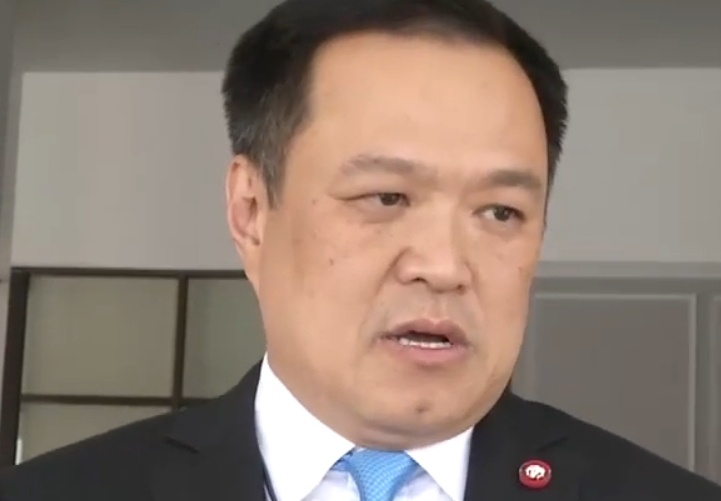
Health Minister Anutin Charnvirakul has estimated that Thailand’s cannabis sectors could be worth more than $3 billion in the next five years, and the pace of change in the cannabis policy landscape indicates that the government has the intention to make the most of this potential.

At the same time, interest groups are advancing connections that could help establish pipelines for a wide range of hemp products. The Industrial Hemp Trade Association of Thailand signed a cooperation agreement with 12 manufacturing industries in September to advance innovations and technology for the hemp industry. Signatories to the agreement represent the automotive, aviation, food and beverage, nutritional supplement, medical, spa, herbal, cosmetic and textile sectors, as well as the wellness tourism industries , furniture and animal feed.
“Essential Medicine”
Thailand took the first step towards decriminalizing cannabis in 2019, when the government allowed the cultivation and use of marijuana for medicinal purposes. Subsequent changes paved the way for cannabis flower processing after the government in late 2020 began allowing manufacturers to produce cosmetics based on hemp seed oil and extracts, and products from plant stems. Hemp oil derivatives for use in food and beverages were approved last year.
In a key change announced in May this year, the Ministry of Health added three categories of cannabis oil to the country’s National List of Essential Medicines, paving the way for public hospitals to administer THC and CBD to patients.
Private cultivation
Thai authorities have yet to come up with legislation to regulate the marijuana trade, and fines and prison terms can be a consequence of smoking marijuana in public. But the rules allow individuals to grow both forms of cannabis privately for health reasons.
When the policy was announced last summer, individuals flooded the nation’s Food and Drug Administration (FDA) with requests for permits, which can be easily obtained through online registration.
Charnvirakul later announced a plan to give away one million cannabis plants to individual Thais. Cannabis “is an opportunity for the people and the state to earn income from marijuana, hemp, tens of millions of baht,” Charnvirakul said at the time the plant gift was announced.
Investment restrictions
The rapid pace of change has seen many Thai companies enter the hemp sector amid strong demand for CBD, food and other commodities. Several domestic companies have announced plans to develop hemp-based businesses in Thailand.
Thailand’s general cannabis law, as it affects investment, sales and imports, is very restrictive. Cannabis permits are only granted to government entities and their partners, and hemp products cannot be imported until 2024, according to rules announced in late 2020.


