In 1810, Francis Cabot Lowell embarked on a mission of American espionage. The target: Britain’s booming cotton industry and, more specifically, its power loom. One hundred years after memorizing and recreating the design of the loom, the US finally surpassed Britain in cotton production. But America’s textile muscles atrophied faster than they developed. You know the story: Automation gobbled up farm and factory jobs, neoliberal policies added fuel to the fire, and manufacturing went overseas in a race to the bottom. Now, as America’s textile industry looks for a comeback, cotton may not be king. At least not if Lucas Evans is involved.
Evans is into hemp. And in a tip of the hat to tradition, he’s processing it for fiber in Taylor, once the world’s largest domestic cotton market. Beyond central Texas, researchers, geneticists, regulators and business people are coming together to develop and support a stable plant that will make hemp a viable part of Texas agriculture.

Hemp was banned by the Controlled Substances Act in 1970, when the US government failed to distinguish it from its sister plant, marijuana. But when it was decriminalized in the 2018 Farm Bill, farmers like Evans began exploring ways to harness the plant’s potential. One that is gaining momentum is using hemp as a fiber crop like cotton and jute, which are harvested to make textiles. Hemp could be a viable cash crop that requires less water and chemical inputs than cotton, provides more income and autonomy to farmers, and helps rebuild America’s dormant textile infrastructure.
Evans was born and raised on a farm outside of Taylor that was settled shortly after Lowell helped start an industrial revolution. In high school, Evans saw his family farm being replaced by suburban row houses as factory farming took over.
Still, he saw agriculture as a vehicle for change. Looking for ways to gain independence from megacorporations with outsized influence on agricultural policy, Evans turned to hemp. I met Evans at a South by Southwest event where he was actively seeking clothing designers interested in making hemp clothing. Despite experiencing the challenges of his family farm, the 27-year-old retains the untrodden spirit of youth, only today he’s joined by the acumen of an agribusinessman who’s been in the game for a while. “I thought [hemp] like purely spiritual or medicinal,” he said. “Then I discovered that the word ‘canvas’ came from cannabis, and it opened my eyes to the plant’s past and future possibilities.”
His conviction is strong, but there are issues that need to be addressed before encouraging cannabis clothing. When the Farm Bill was passed, farmers rushed to grow hemp as sales of CBD products soared. But the market quickly became oversaturated and prices fell. Evans watched the CBD market closely and, unlike the green rush growers before him, took lessons from it to help secure hemp’s future as a fiber.

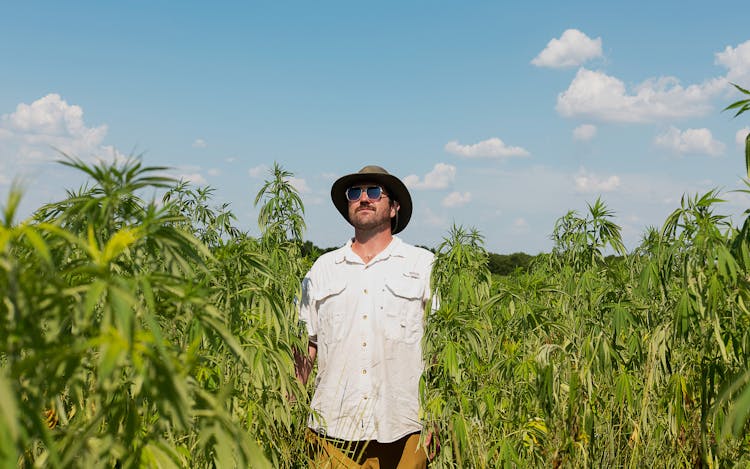
Lucas Evans, the founder of Texas Hemp Processors. Chisum Pierce
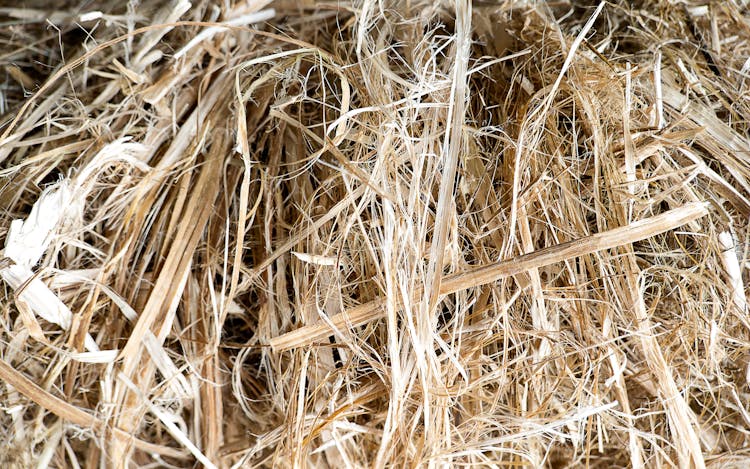
Hemp after decortication at Texas Hemp Processors. Chisum Pierce
During the early days of the CBD boom, many farmers expanded their cultivation operations without the facilities or equipment to convert the plant into CBD oil. “Farmers fail at this because they don’t think about who is going to turn their crop into a product. They think if they grow it, people will come, but that hasn’t happened,” Evans said.
To avoid the same fate, Evans started Texas Hemp Processors. When it opened in 2019, there were no other legal facilities in Texas that could convert a hemp crop into biomass used for textiles, building materials like “hemp felt” or insulation, and more. Today there are two more: Tetra Hemp in the Rio Grande Valley and Delta Agriculture in Slaton. (Two other Texas growers have announced plans to set up fiber processing.) Last year, Evans and his team processed 4,000 pounds of hemp, most of which will become building material, and aim to reach 80,000 this year, with more of it dedicated to fiber. He is excited about his growing location in Taylor, just around the corner from the family farm. “It’s really in the perfect part of Texas, northeast of Austin. It gets as much rain as Seattle, has rich ‘Houston gumbo’ soil and access to railroads.” Their processing facility is located in an old aircraft hangar nearby, reducing traffic.
John Bradley, the founder and CEO of Tetra Hemp, grows hemp 350 miles south, where silty coastal soils rule. He is due to start processing it in October and he told me that perfecting the genetics of the crop first was crucial. He and Evans are working to refine the plant’s genetics with researchers at Prairie View A&M University, where Aruna Weerasooriya, chair of the Department of Environmental and Plant Sciences, is leading a team of scientists, students and private companies to create a repository of fiber genetics. . His team collects data from the hemp plants in his Prairie View greenhouse to determine which strains work best for fiber, where they will grow and what quality of fiber they will produce. This work was challenging at first, both because there are no strains recommended for Texas climates and because hemp has been so manipulated to isolate THC, causing great complexities in the genetics. Whether they want fiber, food, or anything else, most farmers today have to reverse engineer their crop operations.
Still, Weerasooriya remains optimistic. “We have subtropical conditions. I’m sure we can have a stable crop, but we need to do more research,” he said. His colleague Calvin Trostle, a professor in the Department of Soil and Crop Sciences at Texas A&M, doesn’t want to claim Texas as hemp fire too soon. He says, for example, that hemp grown for fiber might be better suited to a cooler climate, where it might “grow shorter.”
Although the plant can grow up to sixteen feet tall, Trostle believes the ideal hemp plant for fiber should be no taller than six feet, with a diameter the size of a pencil. This is because as the plant grows, so do its fibers, which could ultimately produce a thicker textile; taller hemp, he believes, is better suited to building materials or paper. But in China, where half the world’s hemp fiber is grown, the plant is mostly very tall and thin. Texas farmers are splitting the difference: Bradley’s hemp has an assertive height of twelve to thirteen feet and claims it can make a premium fiber. Evans hemp grows six to eight feet tall.

Finally, the hemp industry in Texas can benefit from agreed upon measures to evaluate the fiber after processing. The American Society for Testing and Materials (ASTM) sets standards for evaluating fiber properties and quality. In cotton, for example, ASTM measures color, length, strength, uniformity, and other characteristics to classify the material. Bill Althouse, who sits on several ASTM committees, says this work has progressed slowly with hemp. Right now, ASTM’s hemp fiber committee doesn’t include enough growers or buyers as members, and engineers are still working out the technicalities of how to classify hemp for fiber production.
Although compliance with the standards is voluntary, Althouse believes more producers need to maintain a standard that helps determine the value of their product. Otherwise, he fears the hemp industry will become an echo chamber of people trying to save the world, claiming that everything under the Texas sun can be made with hemp before they consult with engineers or buyers.
If processors can produce a high quality textile, buyers are ready to buy. Austin’s Brianna Kilcullen tried to find locally grown hemp when she started her sustainable towel company, Anact, in 2018. “I looked for hemp in the U.S., but I couldn’t find it. Everyone was doing CBD. The only place willing it was China. I went ahead because I wanted to show the potential of hemp. I knew there could be something made in the United States later.”
It was a similar story with Patagonia. When Evans heard the company was trying to source hemp domestically, he reached out, but ultimately couldn’t meet his specifications. “Even if they’re interested, it’s hard to ask a brand like Patagonia or Levi’s to move a factory to America when we don’t have all the infrastructure in place yet,” he said. Although Patagonia supports American growers, most of its hemp still comes from China.
Evans and Bradley process their hemp with decorticators, which can produce coarser fibers for, say, cloth or denim, but not the finer fibers used for clothing and delicates. The latter would require more processes and equipment to refine the fiber which, until now, have been chemically intensive. That’s why most hemp in the United States is “cottonized,” said Summer Haeske, co-founder and vice president of sales at EnviroTextiles, one of America’s early hemp textile leaders. Instead of processing hemp fiber according to its unique genetic traits, most growers run it through cotton processes because that’s the infrastructure they have now. But, as the name suggests, cottonized hemp acts like cotton, not like the strong, versatile fiber that hemp can be. Haeske says we need facilities that can turn longer hemp fibers into finer fabric.
This sophisticated infrastructure could take years to develop. For now, Haeske and her mother, Barbara Filippone, a textile engineer who helped standardize many Chinese hemp fabrics in today’s market, believe American growers should start with seed and grain (which require less infrastructure than fiber ) and, more critically, they should start. look for ways to use the entire crop. This could be complicated, however, since hemp grown for fiber might require different growing conditions than hemp grown for construction or other less refined materials. But Haeske believes that sacrificing a bit of fiber quality to grow a plant in multiple ways would help protect the grower, especially in the beginning.
Right now, he thinks Evans is the closest thing to Texas getting it right. It farms about 120 acres and processes them for fiber, grain, seeds and other biomass, while offering processing, transit and storage and product development to growers and buyers. To make it in America, he says, hemp will have to be produced in highly localized ecosystems. “It has to be: the processor is the farmer, it’s the retailer.”
Agency for the farmer, after all, is what got him into hemp in the first place.
“It is the definition of a free market in the Wild West. It will take time to rebuild the industry, but if things go well, I think in three years we will have a hemp textile made in Texas. Time will tell if we can weave something worthy out of three. Or if we wait a hundred more.