


This article was originally published on 2Fast4Buds and appears here with permission.
1. CANNABIS LAWS IN RUSSIA
With more than 144 million people, the Russian Federation is the largest country in Europe by both land mass and population. But is there access to legal weed in Russia? Known for its totalitarian regimes of the past, it probably comes as no surprise to learn that cannabis is, in fact, illegal in Russia. In fact, the country is known for having the greater number of people currently imprisoned (per capita) for drug offenses in Europe.

In fact, as you might expect, the Russian government is known for taking a particularly hard line on the possession and use of cannabis. In this article, we’ll dive deeper into Russia’s weed laws, but before we get into the details, let’s start with the basics.
POSSESSION
According to the country’s Penal Code, possession of cannabis is punishable by a fine and/or a prison sentence. However, a amendment of the law in 2012 it allowed the possibility of deferring the penalties if the offender is found to be suffering from addiction problems. The ones inside possession of small amounts of up to six grams will violate Russian administrative law, punishable by a fine or a short prison term of two weeks. However, those found in possession of more than seven grams will face more serious criminal charges.
Penalties for cannabis use in Russia could lead to a long prison sentence.
As you’d expect, these serious charges carry serious penalties, and if you want to be completely safe from the possibility of criminal charges, it’s recommended not to carry anything over 1 gram of cannabis, as authorities are known to exaggerate amount of cannabis. found on possible suspects. In fact, getting stuck with weed in Russia is definitely not a good idea. So consider the huge penalty for weed in Russia before you shoot one in Red Square!

- A fine of up to 40,000 rubles (about 600 euros)
- Mandatory work up to 480 hours
- Corrective work up to two years
- Potential prison sentence of up to three years.
For those found guilty of being involved in large-scale operations, the penalties are even tougher, with a fine of up to 500,000 rubles (about 7,000 euros) and a possible prison sentence of up to twelve years. With all this in mind, the possession or consumption of cannabis in Russia is not worth it, but despite the risks, it is believed that as many as 8.5 million people still consume the plant on a regular basis. For those who are arrested, the chances of avoiding serious penalties are remarkably slim, with the acquittal rate currently at just 0.1%.
SALE
Like possession, selling cannabis is also considered a serious crime, and anyone caught selling the plant can expect a string of equally harsh sentences. Even small operators can expect to lose their freedom (house arrest or possible jail time) for several years.
Large scale operations have resulted in heavier sentences of up to twelve years in prison and a fine of up to 1,000,000 rubles. In fact, if the operation was part of a wider organized crime network, the criminals could even face a sentence of up to twenty years. Despite draconian laws and harsh penalties, drug trafficking, including cannabis, remains a major concern in the Russian Federation.
GROWING UP
Not surprisingly, growing cannabis is also illegal in Russia. Like the penalties for possession or sale, growing marijuana in Russia is a particularly risky business, with prison sentences inevitable, even for those with only a small number of plants.
It is illegal to grow cannabis in Russia.
Despite Russia’s tough approach to cannabis use, there has been positive movement politically. In the summer of 2019, the Russian government passed a bill potentially allowing the cultivation of marijuana for medicinal purposes. However, as of now, the bill has not yet been signed into law and For now, progress on the matter remains stagnant.
2. IS CBD LEGAL IN RUSSIA?
In a word, NO. CBD in Russia is illegal, regardless of the levels of THC contained in the product. Even CBD oil made from hemp is considered an illegal narcotic, while it is not even possible to send CBD products to Russia by mail. Indeed, the recent case of American basketball player Brittney Griner being arrested for possessing illegal hashish oil in Russia highlights the dangers of possessing such products within Russian borders.
3. IS IT LEGAL TO SEND CANNABIS SEEDS TO RUSSIA?
No surprises here: cannabis seeds are also illegal and cannot even be shipped out of the country.
4. MEDICINAL CANNABIS IN RUSSIA
Despite the 2019 bill mentioned above, the use of medicinal cannabis in Russia remains illegal. Still considered to be in the highest category of narcotic and psychoactive substances in the country, access to Russian medicinal cannabis remains completely prohibited. Schedule I substances, including cannabis, are subject to the strictest government regulation.

Despite the amended law, medical cannabis is still illegal in Russia.
In July 2019, the Russian government amended the Law on Narcotic and Psychotropic Substances. It partially legalized the cultivation of plants containing drugs for the manufacture of narcotics and psychoactive substances for medical or veterinary use. It was expected that the regulation would partially allow the cultivation of cannabis for medical or veterinary use, but so far nothing has materialized in this regard. With all this in mind, medicinal cannabis remains inaccessible in Russia, and it seems unlikely that this will change in the near future, given the current circumstances facing the country.
5. INDUSTRIAL HEMP IN RUSSIA
Russia depended heavily on hemp as a crop. In fact, hemp fiber was one of the main sources of income for many parts of the country during the 18th century. In fact, hemp had been an essential commodity in Russia for hundreds of years, and the country became the world’s largest producer by the mid-18th century. At this point, it is estimates that around 80% of the hemp used in Europe comes from Russiawith the resulting material more lucrative for the Russians than even metal, wood or leather.
Entering the 19th century, the United Kingdom became heavily dependent on Russian hemp, leading to the so-called Hemp War with Napoleon. However, in 1807, the French agreed to a peace treaty with Tsar Alexander I on the condition that the Soviets stop supplying UK with hemp.
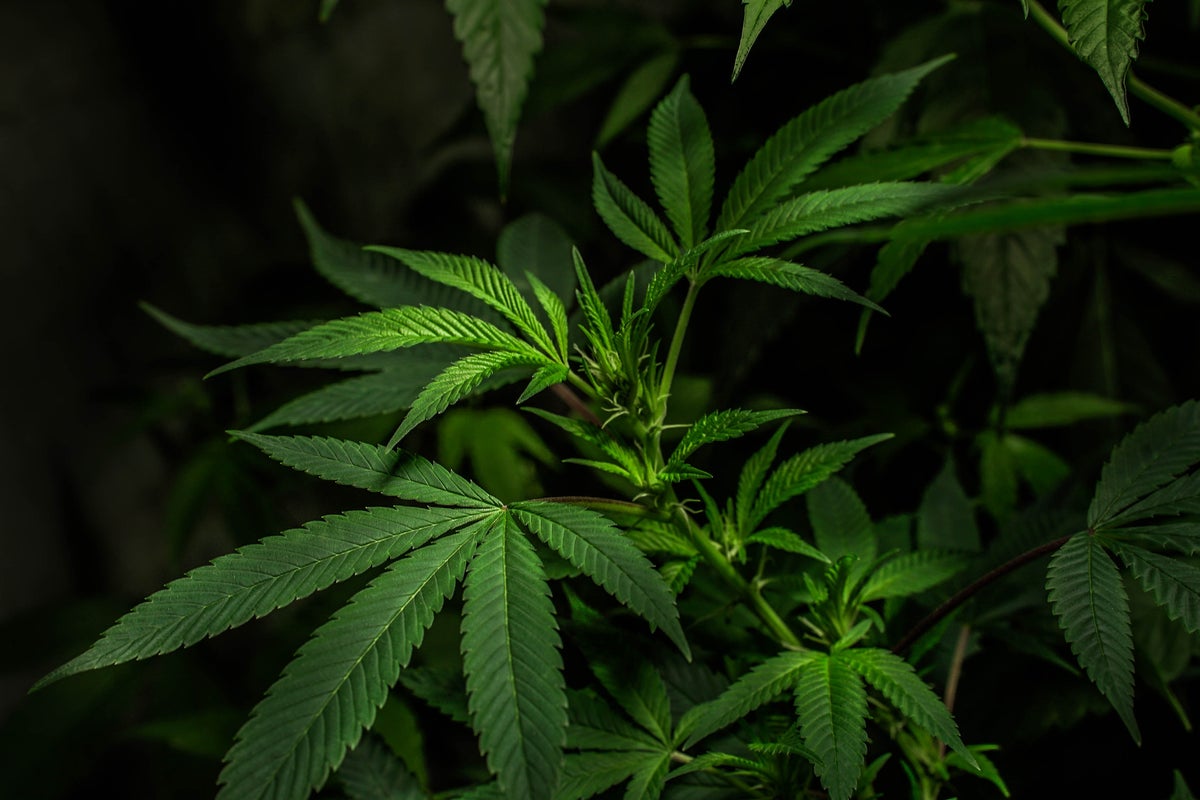
Cannabis hemp plants.
However, the agreement was short-lived, and only a few years later, the hemp trade between Russia and the United Kingdom had re-emerged. Angered by Russian betrayal, Napoleon would lead his army into Moscow in 1812 in an attempt to seize control of the Russian hemp supply. However, Napoleon’s army was quickly overwhelmed and the Russians maintained control over their lucrative hemp industry. Indeed, around 40% of European hemp it was produced by Russia until the 19th century.
However, as Russia entered the 20th century, the hemp trade would decline significantly due to both negative perceptions of the plant (what else is new) and reduced acreage and yields relatively low After the fall of the Soviet Union in 1991, hemp cultivation would decline further. However, despite the decline of the industry, hemp was never outlawed and is still grown in the country today. While there were once sixteen hemp farms growing hemp, today there is only one in Volkhov.
However, despite the industrial decline, it is estimated that there are approximately 2.5 million hectares of wild hemp growing in the east of the country in and around the Black Sea.
6. HISTORY AND POLITICS
Russia has a long relationship with the marijuana plant, with existing evidence suggesting that cannabis was being used in the country thousands of years ago. An archaeological dig at a burial site in the Altai Mountains revealed that the people of the country consumed the plant for medicinal, religious or spiritual purposes. The plant is believed to have first entered the country with the Scythians, a nomadic group known for transporting cannabis as they traveled through many different countries thousands of years ago.
Despite its rich history with the plant, Russia remains very anti-cannabis in its approach today. As we explained in this article, Russia’s approach to cannabis remains extremely harsh, with the penalty for weed in Russia one of the harshest in Europe. Indeed, the Russian position on its opposition to cannabis has been self-evident, with the government’s response to Canada’s legalization of the plant being that Canadians had “deliberately violated” international law.
Consistently opposed throughout his presidency since the turn of the 20th century, President Putin has spoken of his disapproval of both the plant and its legalization in other countries. In fact, there have even been reports that the Russian government threatened to remove access to Wikipedia if the company did not remove certain pages on hashing methods. In a country where freedom and liberty cannot be taken for granted, Russia’s censorship of information about cannabis online only serves to illustrate its strong stance on the issue.
Russian intolerance of cannabis and cannabinoids extends to the world of sports, where athletes are prohibited from using cannabinoids, according to an order issued by the Russian Ministry of Sports in 2018. Unfortunately, the government’s negative stance Russian and opposition to the plant is also reflected in the general population’s acceptance of cannabis users. Different surveys, the veracity of which can hardly be guaranteed, it must be said, indicate that more than 90% of the population is against the legalization of marijuana.
Not as popular or as used in other European countries, it is estimated that only less than 4% of the Russian population uses cannabis. Considering the harsh punishment of weed in Russia, it is not surprising that such a small minority of the country participates in the consumption of cannabis. With all of this in mind, it is unlikely that Russia’s weed laws, especially for recreational users, will change in the near or distant future. While legalization for medical use has been discussed, as evidenced by the yet-to-be-enacted 2019 bill, Russian progress on medical cannabis law remains slow. In fact, the Russians have even adopted an anti-drug strategy that will last until at least 2030. The strategy suggests that the use of cannabis for recreational purposes should be seen as a major threat to the health system Russian
7. GOOD TO KNOW
Given the current conflict in the region, it’s fair to say that Russia’s weed laws are not one of the government’s priorities. With few outside visitors expected in the coming months, the issue of cannabis in Russia is one that is sure to take a back seat as the crisis with Ukraine continues to unfold.
However, if you find yourself inside Russian borders in the coming months, avoiding cannabis is probably your safest bet if you want to avoid the potentially harsh penalty for weed in Russia that could come as tensions with Western nations continue to rise.


