There has been a growing demand from consumers for natural compounds capable of improving food quality and safety. As a result, many have proposed replacing synthetic antioxidants with plant extracts.
Bioactive tea tree oil (TTO) and hemp seed oil (HSO) are of particular interest for their antioxidant and antimicrobial properties.

To study: The biological activity of tea tree oil and hemp seed oil. Image credit: ronstik / Shutterstock.com
background
TTO is obtained from the Melaleuca alternifolia plant in the myrtle family and is known for its antimicrobial properties.
A tea tree is a tree or shrub that forms a bark of paper and that can reach 14 meters in height. This plant originated in Australia and can thrive in mostly warm temperatures. Steam distillation is commonly used for the extraction of active components from the tea tree plant, most of which are terpenes.

After harvest, cold pressing of the hemp seeds allows for the extraction of HSO. The content of cannabidiol (CBD) in HSO can be low or high; however, no comparison has been made regarding the bioactivity of HSOs with different CBD contents with that of TTO.
Along with the antibacterial properties associated with many vegetable oils, these extracts are also associated with antifungal properties. In fact, some vegetable oils can resist the adverse impact of harsh chemicals used to disinfect food processing areas.
This has led to increased demand for improved antimicrobials used in the food industry. Therefore, it is important to discover natural antimicrobials that are not associated with toxic effects.
Antioxidants are synthetic or natural substances that help neutralize harmful reactive oxygen species (ROS). These agents help to avoid oxidative stress that arises from an imbalance between oxidants and antioxidants.
Oxidative stress can be caused by external factors such as smoking, unprotected sun exposure or alcohol consumption. High levels of ROS over long periods can also lead to aging and many chronic diseases. Two plant extracts known for their antioxidant properties include sesame oil and vetiver oil.
A new study in Applied Microbiology compares the antimicrobial activity of HSO and TTO products against pathogenic bacteria such as Salmonella enteritidis (S. enteritidis), Escherichia coli (E. coli) and Staphylococcus aureus (S. aureus). The researchers also evaluated the antioxidant properties of these agents, as well as the existence of any interrelationship between their antimicrobial and antioxidant properties.

About the study
The current study used antimicrobial and antioxidant assays. Antimicrobial assays included time-destruction studies, minimum inhibitory concentration (MIC) evaluation, and the Kirby-Bauer disc diffusion method to assess the antimicrobial properties of the samples.

Comparatively, the antioxidant assay was used to determine the concentration of antioxidants in the sample. This assay was done using the 2,2-diphenyl-1-picryl-hydrazyl-hydrate (DPPH) radical scavenging activity method.
The antimicrobial and antioxidant activity of seven oils including tea tree, sesame, rosehip, vetiver, pure hemp, organic hemp and 5% CBD oil were evaluated.
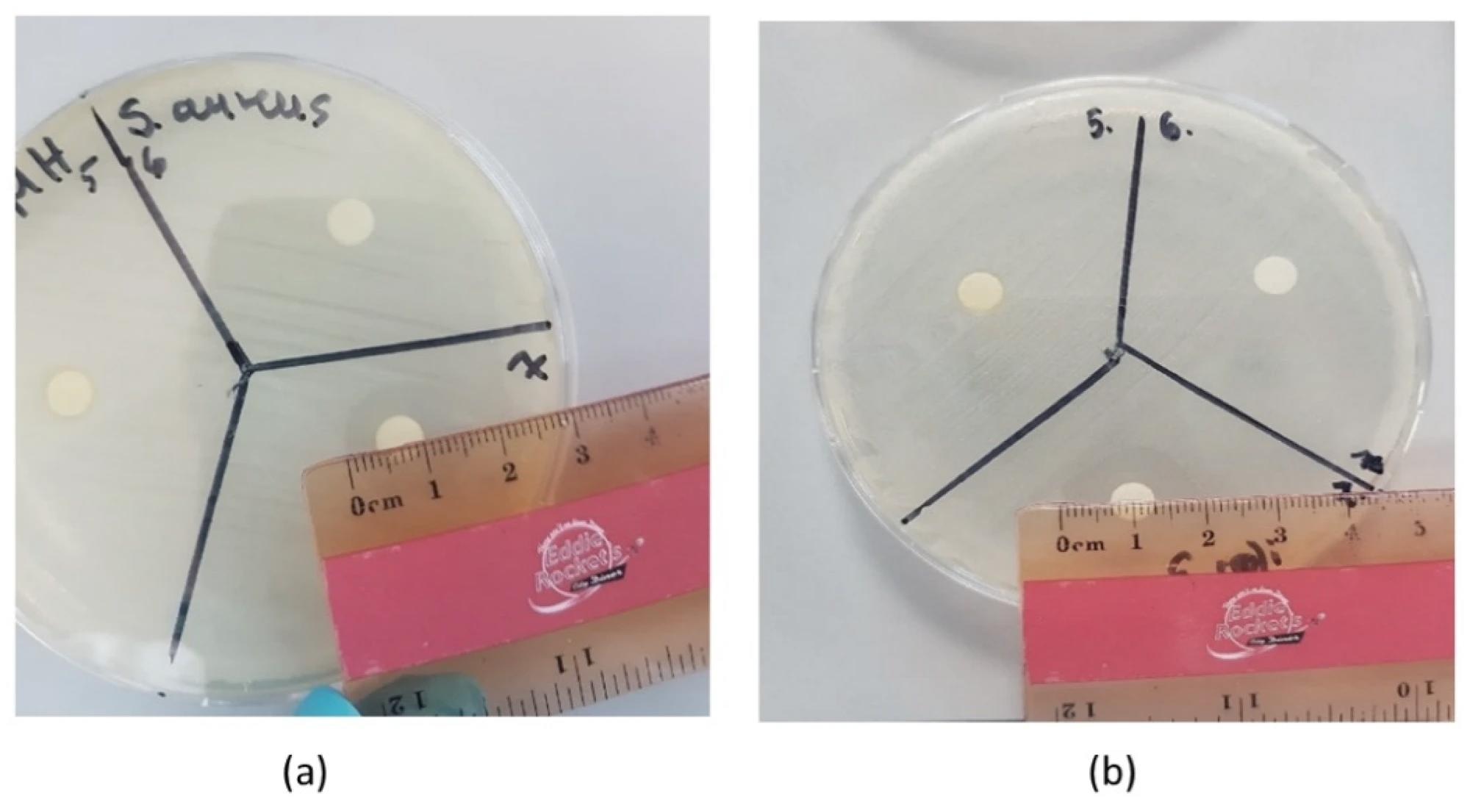 The measurement of the zone of inhibition of tea tree oil on different bacteria: (a) S. aureus and (b) E. coli.
Results of the study
The appearance of bacteria was reported to be six hours, while the highest concentration was observed at 24 hours. The number of bacteria in the TTO group was lower than in the HSO groups.
MIC and disc diffusion method results indicated that of all the oils, TTO showed significant antimicrobial activity against all three pathogens. The MIC range for TTO was reported to be 8, 2, and 8 mg/ml for S. aureus, S. enteritidis, and E. coli, respectively. Zones of inhibition were reported to be 2.19, 1.87 and 2.02 cm against S. enteritidis, S. aureus and E.coli, respectively.
Conversely, 5% CBD oil was found to produce the highest antioxidant activity which was 5.7 times more potent compared to TTO. Pure hemp and organic hemp also showed promising antioxidant properties.
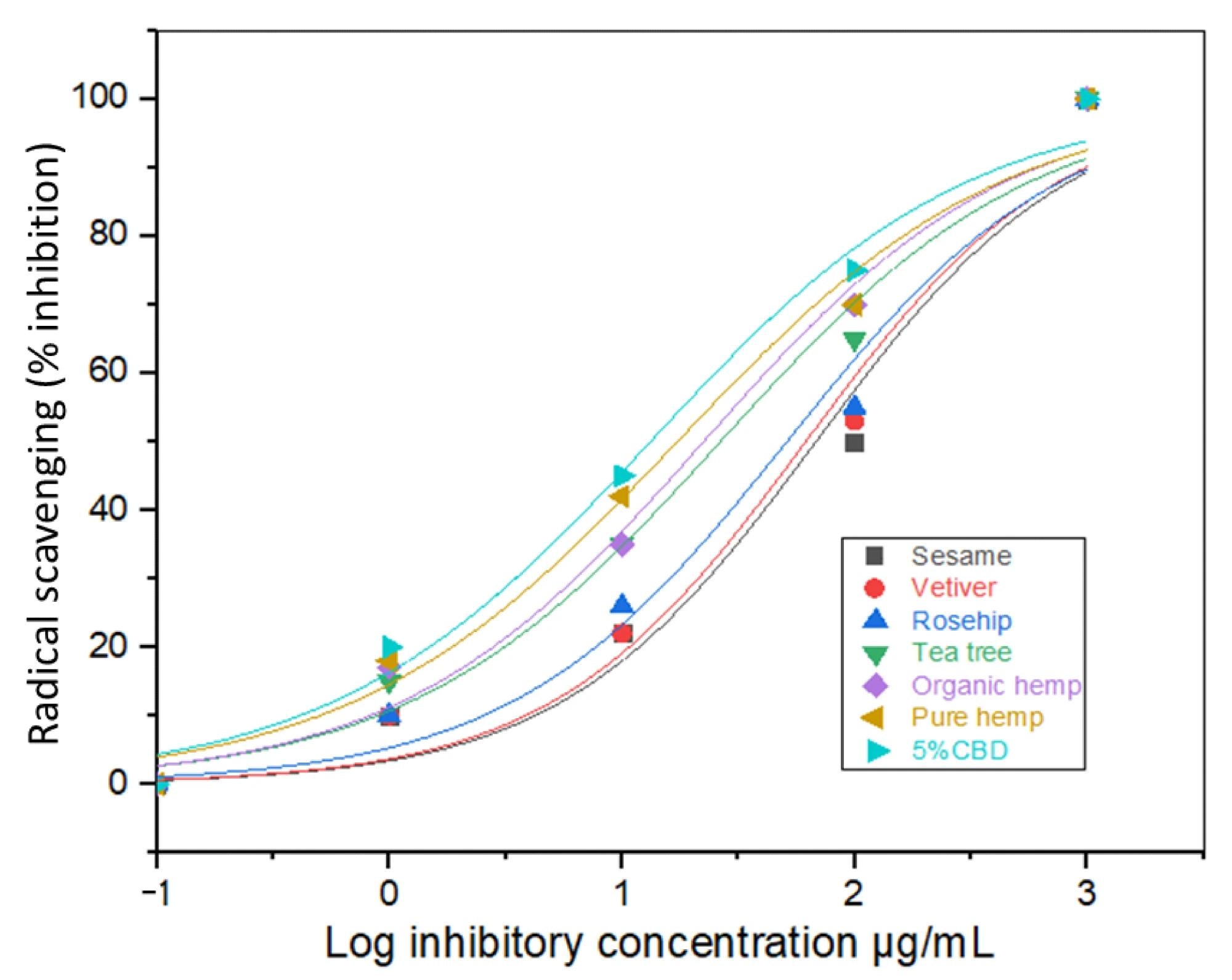 IC50 values of the antioxidant activities of the different oils.
Conclusions
The current study determined that TTO is the most effective antimicrobial agent against E.coli, S. aureus and S. enteritidis. In addition, the CBD content of HSOs was found to play an important role in their antioxidant properties. Substances with more CBD showed better antioxidant properties.
Therefore, both TTO and CBD plants can be useful in food science studies to make food products safe for consumers. Further research is needed to optimize the antimicrobial and antioxidant properties of these oils for use in the food and medical industries.
Journal reference:
- Lakatos, M., Apori, SO, Dunne, J. and Tian, F. (2022). The biological activity of tea tree oil and hemp seed oil. Applied microbiology. doi:10.3390/applmicrobiol2030041.