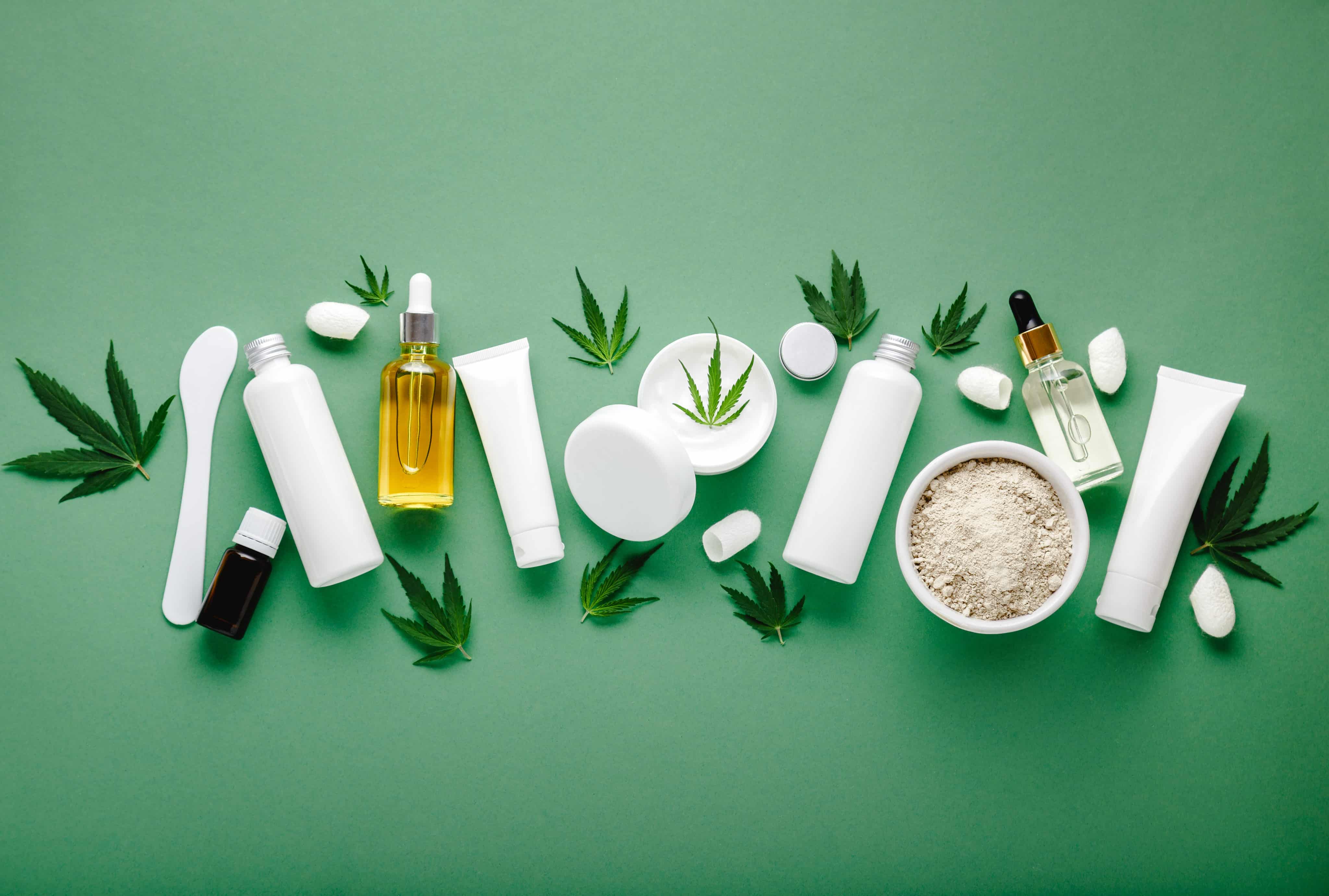
A study published by Johns Hopkins Medicine on July 20 found that in an evaluation of numerous CBD products, many contained an inaccurate amount of THC. Titled “Cannabinoid Content and Label Accuracy of Hemp-Derived Topical Products Available Online and in National Retail Stores,” the study analyzed 105 topical CBD products, specifically lotions, creams, and patches, collected from ” online and brick-and-mortar retail locations.” ” in Baltimore, Maryland between July and August 2020 (but the analysis did not occur until March to June 2022). For storefronts, this included grocery stores, pharmacies, cosmetic and beauty stores, and health and wellness stores.
The study’s lead author, Tory Spindle, Ph.D., assistant professor of psychiatry and behavioral sciences at the Johns Hopkins University School of Medicine, explained the purpose of this analysis. “Misleading labels can lead people to use unregulated and expensive CBD products instead of FDA-approved products that are established as safe and effective for a given health condition,” Spindle said.

The results found that 18% of the products contained 10% less CBD than advertised on the label. Additionally, 58% contained 10% more CBD than advertised, while only 24% contained an accurate amount of CBD.
Thirty-five percent of these products contained THC, although the amount per product did not exceed 0.3% THC, which is the legal limit for hemp. Eleven percent of these products were labeled “THC-free,” while 14 percent said they contained less than 0.3 percent THC, and 51 percent did not mention THC on the labels.
Spindle said the presence of THC in alleged CBD-only products could put some people at risk. “Recent research has shown that people using CBD products that contain even small amounts of THC could test positive for cannabis using a conventional drug test,” Spindle said.
Some of the medical claims made by these products were also inaccurate and none of them are approved by the US Food and Drug Administration (FDA). 28% made pain or inflammation claims, 14% made cosmetic or beauty claims, and 47% specifically noted that they were not FDA approved, while the remaining 53% did not mention the FDA.

The study’s lead author, Ryan Vandrey, Ph.D., who is also a professor of psychiatry and behavioral sciences at the Johns Hopkins University School of Medicine, explained that this large difference in results warrants further investigation. “The variability in chemical content and labeling found in our study highlights the need for better regulatory oversight of CBD products to ensure consumer safety,” Vandrey said.
This study is the latest to discuss the inaccuracy of cannabis products. The University of Kentucky also recently analyzed CBD oil products earlier this month, finding that out of 80 CBD oil products, only 43 contained percentages of CBD that were within 10% of the claimed content. The University of Colorado, Boulder, in partnership with Leafly, also found cannabis labels to be inaccurate.
Johns Hopkins University has been continuously involved in cannabis study efforts over the past few years. In September 2019, Johns Hopkins University launched the Center for Psychedelic and Consciousness Research with the goal of expanding research on psychedelic substances in order to create new treatments for specific psychiatric and behavioral disorders. In October 2020, it partnered with Realm of Caring and Bloom Medicinals to work on cannabis therapy research. In October 2021, the university published a study showing evidence of cannabis successfully treating anxiety and depression. Earlier this year, in February, it asked for volunteers to participate in a paid cannabis and alcohol research initiative (which could fetch up to $2,660 for one person to complete the study).