


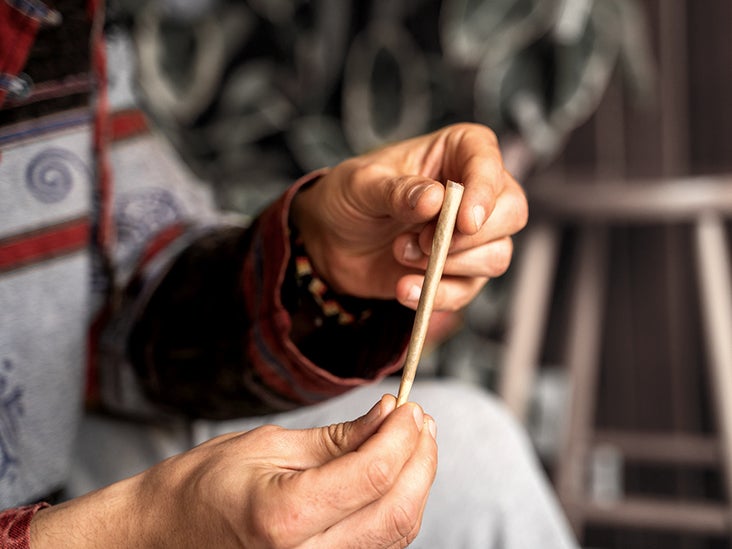
Some small studies and anecdotal sources suggest that people with autism may benefit from the therapeutic effects of cannabis. However, there is currently insufficient evidence to support this claim.
The brains of people with autism and people without autism spectrum disorder (ASD) develop differently. As a result, people with autism may behave, interact, and learn differently from people without ASD.

Having ASD can lead to repetitive patterns of behavior and some difficulty in social interactions. ASD also sometimes causes a delay in language development, hyperactivity, seizures, and gastrointestinal problems.
Medications can treat some of the symptoms of ASD. In addition, if the symptoms of ASD have a negative effect on quality of life, a person may consider trying medical cannabis.
Read on for more information on ASD and cannabis use, including the risks, potential benefits, and some other alternative ways to reduce certain symptoms.

A major stigma surrounds autism. In general, medical experts do not believe that there is a cure. And people with autism may feel that there is no need for treatment, management, or care.
Meanwhile, researchers continue to explore the therapeutic uses of cannabis. According to a 2018 review, there is conclusive evidence that cannabis can treat:
- pain in adults
- nausea and vomiting due to chemotherapy
- muscle spasms and tension related to multiple sclerosis
The author of this review also found moderate evidence of:
- secondary sleep disorders
Although this review did not mention ASD, the 2019 research looked at existing peer-reviewed literature related to cannabis-related as a treatment for ASD. The authors concluded that there was a lack of clear evidence that cannabis reduced the symptoms of ASD.
The team highlighted the urgent need for large-scale studies to improve understanding of the risks and potential benefits.
However, other studies and anecdotes suggest that cannabis may benefit people with certain symptoms of ASD. For example, the authors of a 2021 review concluded that cannabis and the plant’s natural compounds, called cannabinoids, could be an effective alternative therapy for the symptoms of ASD.

The authors of the 2021 review found that cannabis products can reduce the frequency and intensity of a number of symptoms, such as:
- hyperactivity
- attacks of self-harm and anger
- sleep problems
- anxiety
- restlessness
- psychomotor agitation, which involves aimless activity, such as walking around the room or touching toes
- irritability
- aggressiveness
- depression
They also found evidence that cannabis can improve:
- cognition
- sensitivity of the senses
- attention
- social interaction
- language
Also in 2021, a Minnesota State University researcher conducted a review of the scientific literature on autism and marijuana in children. The results suggest that cannabis may help reduce the severity of the symptoms involved:
- social communication
- self-injury
- restlessness
- rabies attacks
- agitation
- aggressiveness
- irritability
The researcher also found benefits for conditions that autistic children may also experience, such as:
- anxiety and nervousness
- epilepsy
- sleep problems
- hyperactivity or concentration problems associated with attention deficit hyperactivity disorder
Treatment resulted in a reduction in the need for medication in some participants.
A 2019 study looked at the effects of cannabidiol (CBD) on 53 children with ASD. The children were, on average, 11 years old. Professional nurses taught parents how to administer oral CBD oil. The children received treatment for an average of 66 days.
The team found that nearly 70% of children who experienced rabies attacks showed an improvement in this symptom.
Similarly, about 70% of children who experienced hyperactivity also showed improvement. And of the 21 children with sleep problems, more than 70% showed improvement. Nearly half of the 17 anxious children showed a reduction after CBD use.

Most researchers agree that drawing clear conclusions about the effects of cannabis on ASD requires large-scale, high-quality clinical trials.
Previous studies describe several common side effects of cannabis as a treatment for ASD, most of which appear to be mild. Side effects include:
- sleep disorders
- drowsiness
- changes in appetite
- restlessness
The Minnesota State University study also observed an episode of psychosis, which required treatment.
In 2019, researchers analyzed reviews to assess the effects of medical cannabis. They found adverse effects in 49 of the 59, or 83%, reviews that had compared the effects of cannabis with those of a placebo. They found adverse effects in 20 out of 24, also 83%, of reviews that had compared cannabis to active drugs.
More than half of the reviews reported minor side effects, such as drowsiness and dizziness. But 21 of the 59 reviews that reported adverse effects found serious damage.
It is worth noting that some reviews looked at synthetic cannabinoids, rather than compounds extracted from the plant. Research indicates that synthetic cannabinoids can have more serious side effects than cannabinoids of plant origin.
In addition, some researchers warn that taking cannabis can have long-term effects that experts do not yet fully understand.
A multicenter survey suggests that 44.8% of autistic adults in Germany currently use or have used complementary and alternative medicine (CAM).
Examples of CAMs to treat autism symptoms include:
- homeopathy
- acupuncture
- yoga
- biofeedback
- animal-assisted therapy
However, while these therapies are unlikely to have serious side effects, there is little scientific evidence to suggest that they treat the symptoms of ASD.
However, there is some evidence that nutritional changes can help. For example, a 2019 study found that taking long-chain omega-3 polyunsaturated fatty acids daily could improve some symptoms of ASD. Participants received 722 milligrams of docosahexaenoic acid with or without 2,000 international units of vitamin D3. This study included 73 autistic children aged 2.5 to 8 in New Zealand.
Some people also consider chelation therapy, a procedure to remove heavy metals from the body, as a treatment for some symptoms of ASD.
Although a 2017 study suggests that there may be a link between the uptake of toxic metals, the deficiency of essential elements and the risk and severity of ASD, there is little evidence that chelating therapy is safe or effective in this regard. context. It has the potential to cause serious damage such as calcium deficiency, kidney damage and death.
Some research suggests that cannabis may help treat certain symptoms of ASD in some people, although there are risks. In general, drawing conclusions requires more high-quality clinical studies.
People also consider a number of other alternative therapies, although most have little scientific support.


