


By Keith A. Sharkey, PhD with Kristopher S. Svendsen and Timothy D. Roth
A brief history of cannabis and the discovery of ECS

Medicinal plants have long been used for their beneficial effects, because many plants produce molecules that have chemical or functional similarities to the molecules of the human body. One such example is cannabis. Cannabis has been cultivated for thousands of years and has been used medicinally since at least 2700 BC in China, where it was consumed as an appetite stimulant.1

Cannabis leaf
Source: Eric Gevaert / Dreamstime

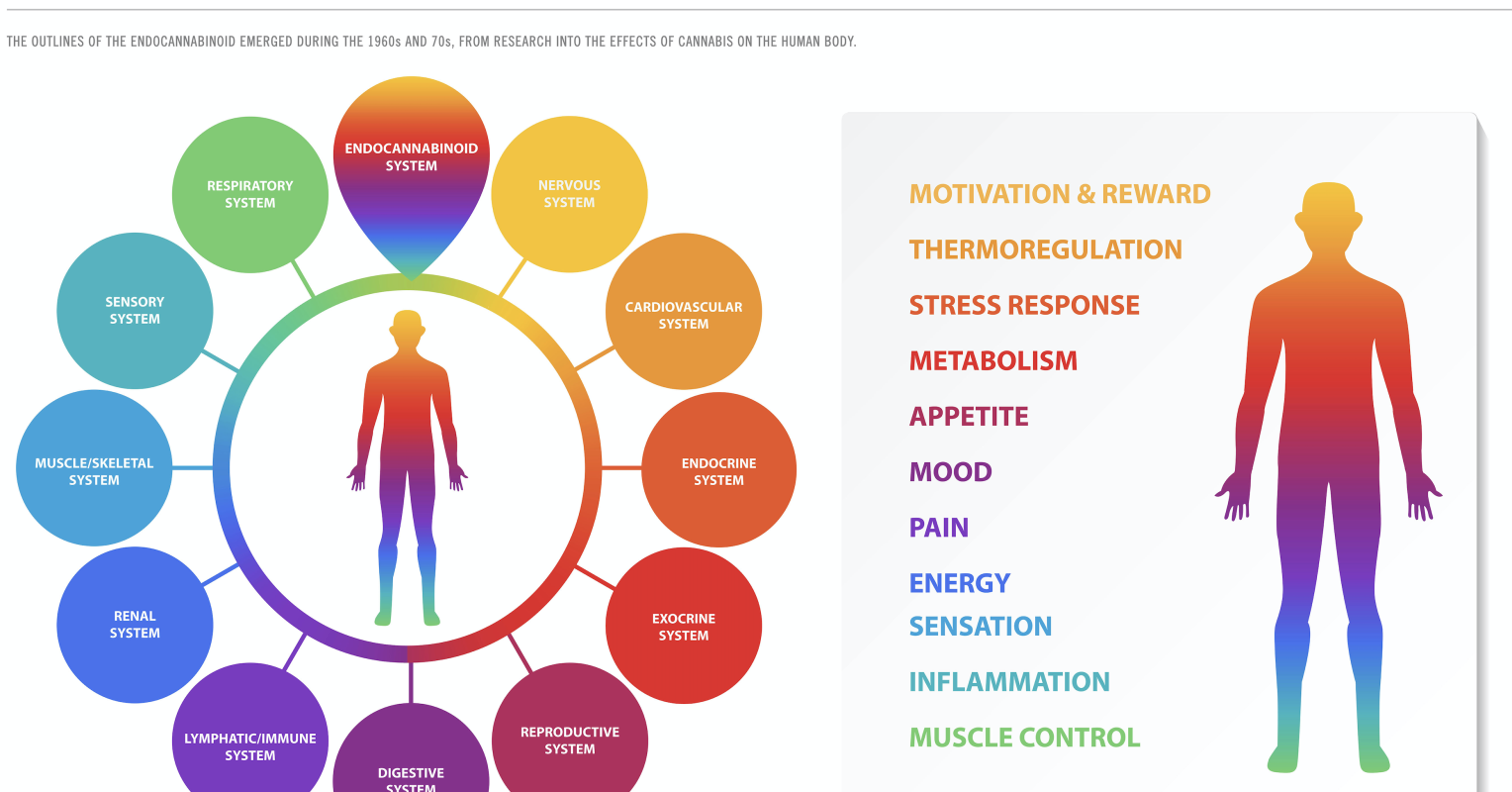
In the 1990s, after the discovery that Δ9-tetrahydrocannabinol (THC) was the major psychotropic component of cannabis, molecules were identified in our body that acted on the same receptors that stimulate cannabis. The first endocannabinoid to be discovered was called anandamide, derived from the Sanskrit “ananda” meaning “happiness” .2 Subsequently, a whole system of related chemicals was described, now called the endocannabinoid system (ECS). And it is an integral part of the biochemistry that controls the human body.
The endocannabinoid system and the intestine
ECS regulates aspects of almost every organ system in the body, and the gut is no exception. The gastrointestinal tract is a system of vital organs of great complexity and sophistication. But much of what we eat cannot be digested without the help of the billions of microbes that live next to us in the gut. Intestinal microbes synthesize essential nutrients, aid digestion, promote proper immune function, and regulate metabolism. They also make substances that act on the brain and alter its function.
Recent research has found that bacterial by-products (metabolites) also regulate intestinal endocannabinoid levels that influence motility (movement of food along the gastrointestinal tract) and intestinal permeability. ECS also plays a role in metabolism; The synthesis of glycogen, proteins and lipids requires the activation of ECS. But when ECS is overactivated, an imbalance occurs with the hormones that control hunger. This can lead to a pathophysiological condition involving abnormal endocannabinoid signaling, which is associated with disorders such as obesity.3,4.
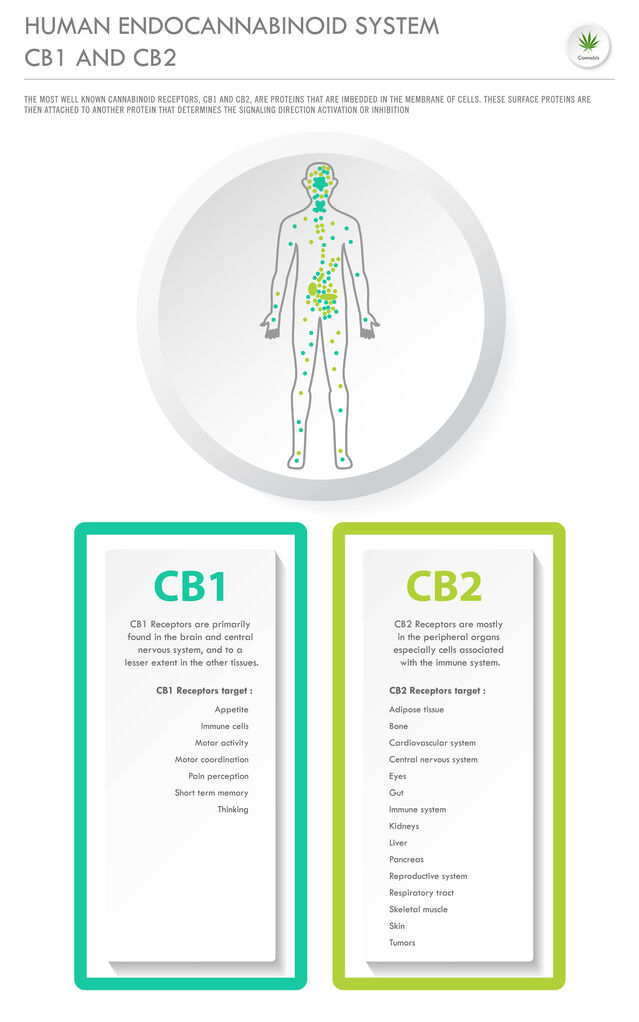
The endocannabinoid system


Font: Designsuchawat / Dreamstime
The role of ECS in the gut-brain axis: recent findings
A 2020 study5 examined the role of the microbiome and ECS in mice with depressive symptoms. The researchers found that the symptoms were accompanied by a decrease in endocannabinoid signaling, associated with a reduction in fatty acid precursors produced by the microbiome. They found that depressive symptoms could be alleviated by supplementing with a Lactobaccilli probiotic or increasing pharmacologically increased endocannabinoid levels.
A follow-up study at Oxford6 examined this effect on the human population by recording TwinsUK data on twins in the UK. The authors found that anedonia (inability to experience pleasure) and motivation (lack of motivation) could be predicted by the degree of microbial diversity in the gut. This association was also correlated with the fecal levels of the endocannabinoid molecule palmitoylethanolamide. Their findings suggest that the gut-ECS microbiome plays an important role in motivation and emotional states.
Cannabidiol Oil (CBD): Panacea or Problematic?
With the legalization of cannabis in Canada and several U.S. states, many people have begun using products such as cannabidiol oil (CBD). Although the beneficial effects of these products have been widely reported, recent studies have also shown that regular consumption can have complicated physiological effects.
For example, in a preclinical study from 20207, researchers showed that daily consumption of CBD oil for two weeks alters the gut microbiome. The authors found that the beneficial species of intestinal microbes Akkermansia muciniphila was elevated, but proinflammatory mediators were also increased. Therefore, regular consumption of CBD oil can have both positive and negative effects. These results suggest that while cannabis products can be a great relief for some people, more research is needed to understand all the effects of these products on the human body.
Conclusion
The intestinal microbiome and the ECS mutually affect each other and, through this relationship, influence our psychological and physiological states. In turn, what we choose to put on our body can alter these relationships both positively and negatively. Undoubtedly, further research into the gut-brain-microbiome-ECS relationship will lead to new therapeutic discoveries for many conditions ranging from gastrointestinal disorders such as irritable bowel syndrome to mood disorders. such as anxiety and depression.


