Global Easing On Cannabis Could Jumpstart Markets
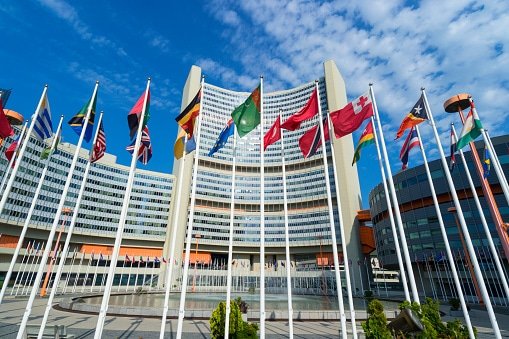


The United Nations has voted to remove cannabis from its classification as a dangerous drug. This week the U.N. Commission on Narcotic Drugs voted to remove cannabis and cannabis resin from a category of the world’s most dangerous drugs. This decision could potentially jumpstart the global medical marijuana industry. Many cannabis companies have eyed global expansion, but the markets have proven to be challenging as laws have remained strict.
The Vienna-based U.N. agency said in a statement that it had voted 27-25, with one abstention, to follow the World Health Organization’s recommendation to remove cannabis and cannabis resin from Schedule IV of the 1961 Convention on Narcotic Drugs, where it was listed with heroin and several other opioids. The drugs that are on Schedule IV are a subset of those on Schedule I of the convention, which already requires the highest levels of international control. The agency voted to leave cannabis and cannabis resin on the list of Schedule I drugs, which also includes cocaine, Fentanyl, morphine, Methadone, opium and oxycodone, the opiate painkiller sold as OxyContin.

“The Court notes, next, that, to define the terms ‘drug’ or ‘narcotic drug’, EU law3 makes reference inter alia to two United Nations conventions: the Convention on Psychotropic Substances4 and the Single Convention on Narcotic Drugs.5 CBD, however, is not mentioned in the former and, while it is true that a literal interpretation of the latter might lead to its being classified as a drug, in so far as it is a cannabis extract, such an interpretation would be contrary to the general spirit of that convention and to its objective of protecting ‘the health and welfare of mankind’. The Court notes that, according to the current state of scientific knowledge, which it is necessary to take into account, unlike tetrahydrocannabinol (commonly called THC), another hemp cannabinoid, the CBD at issue does not appear to have any psychotropic effect or any harmful effect on human health.”

This article originally appeared on Green Market Report and has been reposted with permission.
—————————
By: Green Market Report
Title: Global Easing On Cannabis Could Jumpstart Markets
Sourced From: thefreshtoast.com/news/global-easing-on-cannabis-could-jumpstart-markets/#utm_source=rss&utm_medium=rss&utm_campaign=global-easing-on-cannabis-could-jumpstart-markets?utm_medium=Feed&utm_source=Syndication
Published Date: Fri, 04 Dec 2020 11:00:00 +0000