Is Marijuana Stronger Now Than It Was In The 1960s?
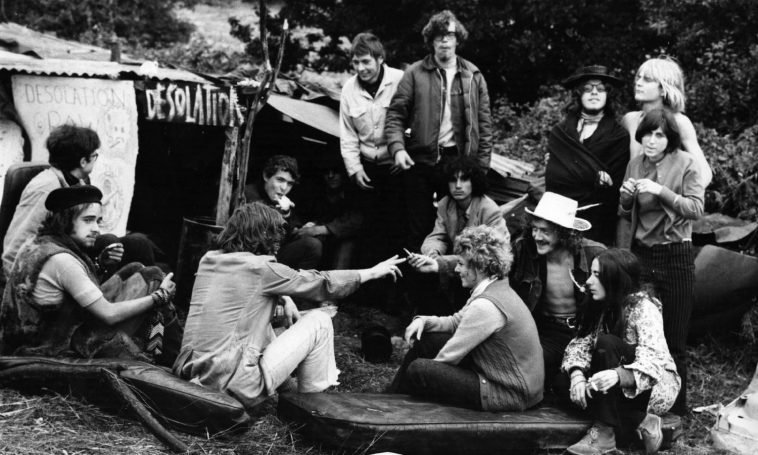


One of the most successful themes in prohibitionist propaganda is the “New Potent Pot” line, which tells us that “marijuana stronger than it was back in the 60s, when everyone thought it was harmless.”
This “new potent pot” line is intended to negate the knowledge gained by experience and thereby eliminate this type of objection. It is said that the THC levels of marijuana today are (pick a number) times higher than in the past.

SEE: Is Trump Willing To Lose the Election For Marijuana Prohibition?
The notion that today’s marijuana that your children might smoke is qualitatively different from the marijuana in the past is obviously perfect for anxious parents who have been conditioned by decades of prohibitionist propaganda to feel guilty about their youthful “experimentation.” In this regard it is very successful.
That there is no data to back it up is not a problem, because, when the subject is marijuana, the usual purveyors of data — the media (right, left and center) — have been in the anti-fact business for decades. They have enshrined the “new potent pot” line as a basic part of “conventional wisdom.” Everyone knows…. Actually, it is what everyone does not know that is important.

There are several important points to be learned from looking at this particular bit of prohibitionist propaganda.
Data, data, who’s got the data?
Any time that someone compares today’s marijuana with that of the 1960s — or Woodstock, which is somehow still a common reference point — you can know with absolute certainty that they are lying. There is simply no data — no data — on marijuana potency from the 1960s, much less from any one concert. The first testing of marijuana for THC did not begin until the early 1970s.
Here it gets a little bit more complicated.
In 1972, the first year of official government testing for the THC level, a small sample of marijuana of unknown origin, but probably Mexican, averaged only 0.18% THC. This is below the level of industrial hemp, but this number is often used as the base for comparison to justify the high multiples.

SEE: Prohibition 2.0 Making a Mess of Marijuana Legalization. Just Get Out of the Way
If a visitor to the U.S. walked out of his hotel and met a homeless person dressed in rags, and insisted that this was the typical American, ignoring everyone else in sight, you would question the visitor’s judgement — or integrity. In effect, that is what prohibitionists are doing when they use this 1972 government number. It requires persistent dishonesty.
In their book Marijuana Myths, Marijuana Facts, Zimmer and Morgan devote a short chapter to the data on marijuana potency. I recommend this book for many reasons, but this chapter alone is worth the price of the book.
They point out that in 1973 a private company PharmChem tested four times as many samples as the government, and the average potency was 1.62%. Did marijuana increase in potency tenfold in one year?
What about the children?
So, yes, there is some very strong marijuana available today, just as there was in the 1960s and 70s. Does this pose a threat to “children?”
Well, if more potent marijuana really were more dangerous — and it is not, more on that soon — it might be a threat to very rich children. The scourge of Beverly Hills.
The fact is that most kids are very unlikely to be able to afford the stronger strains of marijuana. Kids get the cheaper stuff, in part because they have limited budgets, and partly because there are not many young connoisseurs. Consequently, when prohibitionists mix lying about potency with concern about children, this has even less to do with the real world than is usually the case.
Also, all this speculation requires that we continue to ignore the Dutch experience. There has long been some very strong marijuana available in the Netherlands, along with much that is in the American range, but people do not automatically buy the strongest.
Experienced smokers do not always go for the “strongest” marijuana, just as people don’t drink pure grain alcohol. People find that there are strains that they like and stay with that.
One of the things that prohibitionists do not understand – or don’t want to understand – is that there are important differences in various marijuana strains other than THC levels. Again, consider that there are differences in various alcohol drinks other than alcohol content.
In some ways the differences in marijuana strains are chemically more important than the differences between beer and Bourbon. Alcohol is the only active ingredient in most alcohol drinks, but the different cannabinoids influence the quality of the marijuana high. This is one reason that many people find Marinol, the synthetic pharmaceutical version of THC to be unpleasant. In short, focusing solely on THC “potency” is misleading.
Of course, under prohibition it is very difficult to find consistent supplies, so this not only increases the emphasis on THC potency, it also makes it difficult to know the potency of any given supply.
The circumstance in which marijuana with higher levels of THC may pose a danger would be when someone does not know its potency and smokes more than necessary for the desired effect. While the onset of a high from smoking is fairly rapid, a person might take several puffs of 15% THC marijuana when they are accustomed to the same amount of 10% THC product. This can produce undesirable results. Fortunately, the effects are almost always transitory.
Stronger marijuana may actually be safer.
As Zimmer and Morgan point out in Marijuana Myths, Marijuana Facts, increased potency does not mean increased danger. In fact, just the opposite may be true.
Inasmuch as almost all smokers find being over-stoned unpleasant, people use only enough marijuana to achieve the desired effect. Insofar as the one clearly established risk in using marijuana comes from smoking, the less a person has to smoke to achieve a desired “high” the better. As noted, if there is the unexpected high from marijuana of unknown potency that may pose a risk to smokers, but this is a consequence of contraband and a lack of standards under marijuana prohibition, not something intrinsic to the plant.
As observed, the primary value of this line is that it is used to negate the experience of those who smoked in the past. However, some of the prohibitionists have become more creative.
Hemp is really marijuana, after all.
SEE: We Know Too Much About Marijuana for It To Be Illegal
In one area it seemed as though this line could backfire on the prohibitionists. I have seen a number of articles about hemp in which either the journalist or hemp industry representative said that industrial hemp legally has only 0.30% THC, while marijuana has 10% to 15% THC. Well, how could anyone be concerned about hemp, if marijuana has 20 to 30 times more THC?
However, now the prohibitionists are still opposing hemp by saying that the marijuana smoked back in the 1960s and ‘70s had only 0.50% THC. In other words, the hippies were smoking hemp. Clever, eh?
But now more potent marijuana is claimed to be qualitatively different and causes violence and addiction. Imagine someone saying that the effects of whisky are qualitatively different from beer.
But of course, this is classic reefer madness. The problem here is that if it takes the “new potent pot” to cause “addiction” and violence, why were they saying the same thing sixty years ago? Prohibition causes long-term memory loss.
The “new potent pot” is worth a lot of money, and involves organized crime.
One of the oddest things about prohibitionism is that it treats making money in a capitalist society as an intrinsically evil thing. The business of America is business, but making money on marijuana is morally wrong, unlike making money on guns, gambling, booze, etc. Consequently, we are supposed to be outraged and alarmed when we are told that the “new potent pot” sells for thousands of dollars per pound in some markets. This makes it morally worse than ordinary marijuana. Of course, this leads to Organized Crime!
This is the classic case of prohibition, of course. The high prices and criminal activity are the result of the laws against marijuana, not of marijuana itself.
Many people may even understand this obvious point, and still be outraged by the high prices, or the size of the market, as though this were some sort of moral insight.
If this moralistic outrage were happening in a socialist country, it would at least be consistent with the dominant philosophy, but in America???
Conclusions: What will be the impact of legalization on potency, price, and safety?
Richard Cowan is a former NORML National Director and author of The Economic Consequences of the Pandemic Meet the Drug War.
—————————
By: Richard Cowan
Title: Is Marijuana Stronger Now Than It Was In The 1960s?
Sourced From: thefreshtoast.com/opinion/is-marijuana-stronger-now-than-it-was-back-in-the-60s/#utm_source=rss&utm_medium=rss&utm_campaign=is-marijuana-stronger-now-than-it-was-back-in-the-60s?utm_medium=Feed&utm_source=Syndication
Published Date: Mon, 26 Oct 2020 14:00:03 +0000